What should I do with my hands in photos?
Use simple hand actions for standing and seated portraits, with comfortable fingers, natural props and a quick frame check instead of a rigid pose.
By InstaBF · · 3 min read
Start here
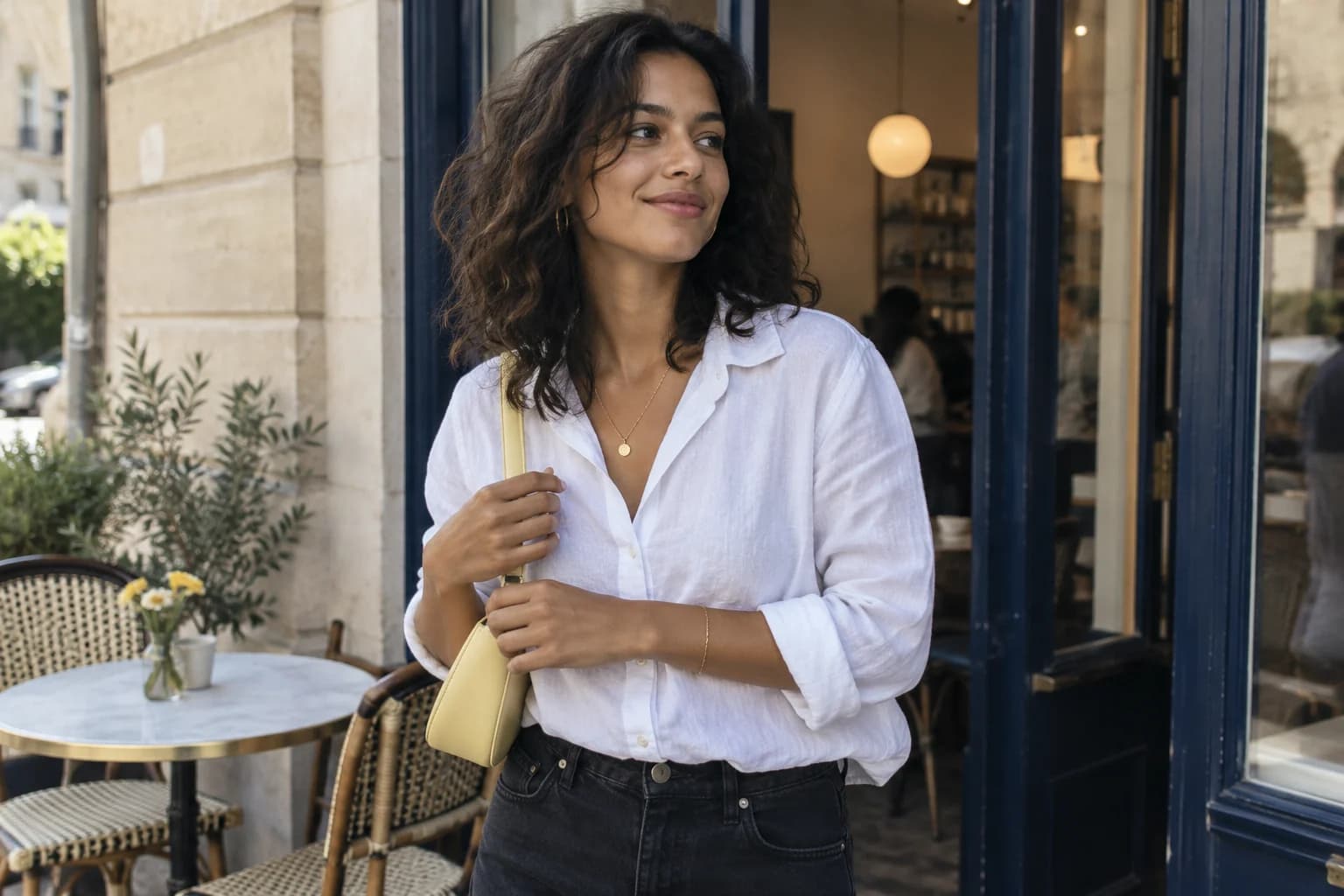
Give your hands one light, believable task: touch a bag strap, adjust a cuff or rest them on a stable chair. Keep the action loose and repeatable instead of arranging every finger.
Choose a task that belongs in the scene
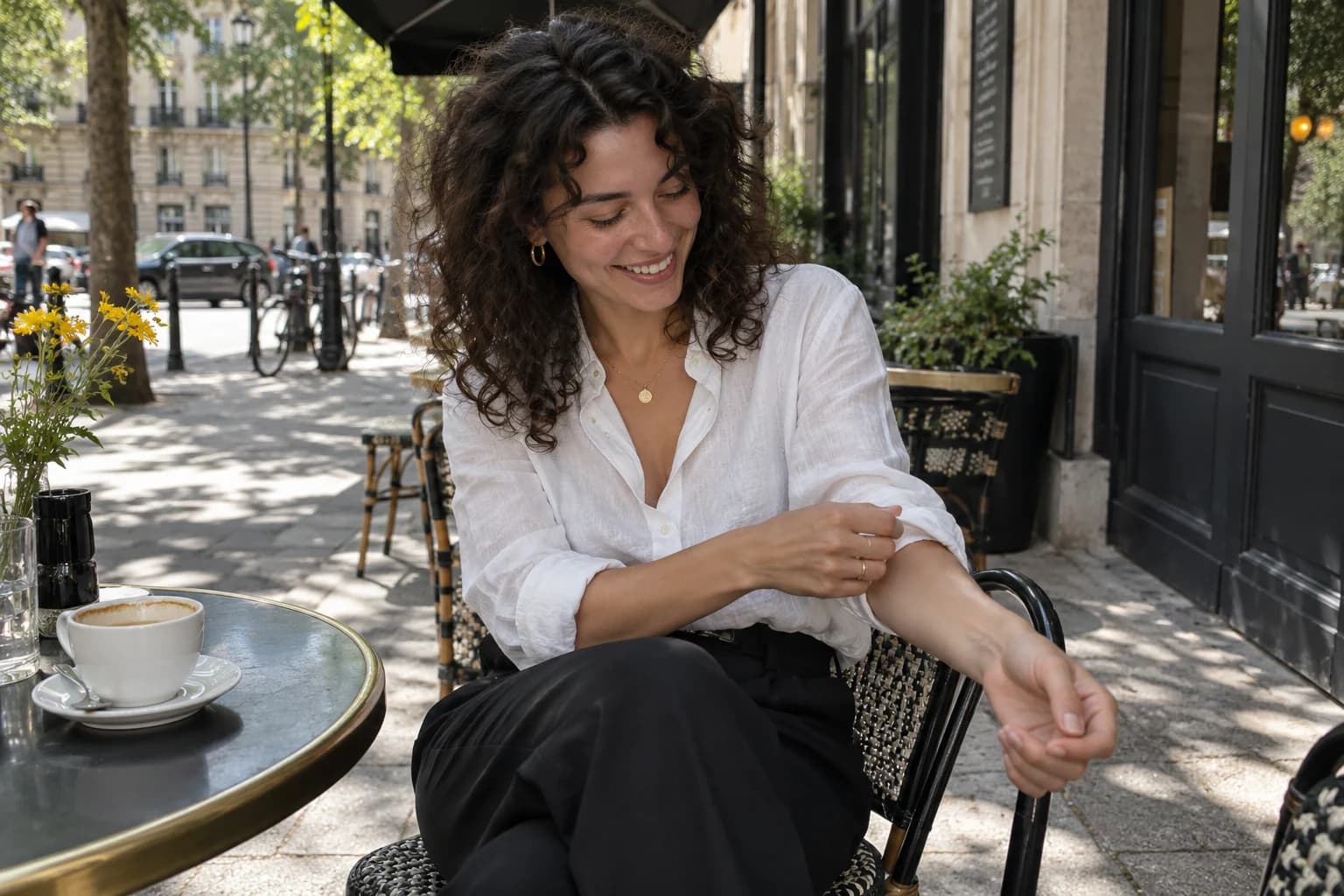
Use something you already have or would naturally touch. Outside a café, that might be a bag strap or a jacket cuff. Seated at a table, it might be a cup that is already there. A prop should help you settle into the scene, not create a new performance.
Try the action before the camera comes up. Notice whether you are gripping, stretching the fingers or holding the shoulders tense. Relax and repeat it with less effort. If the prop adds more uncertainty, put it down and let a hand rest naturally instead.
Use different starting points for standing and sitting
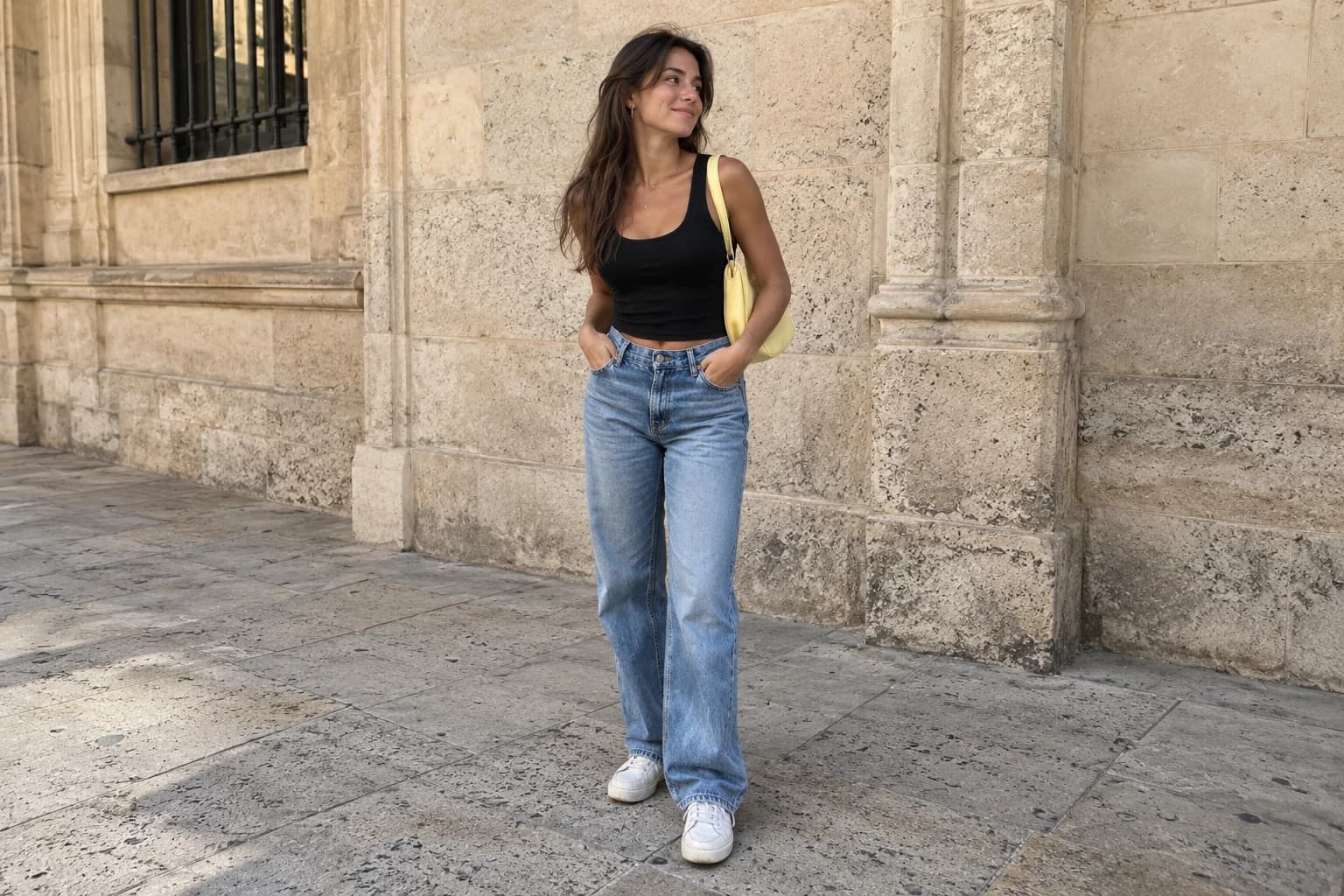
For a standing portrait, try one hand lightly touching a strap while the other hangs comfortably, or adjust a sleeve and then let both arms relax. Do not keep rechecking every finger. Ask for a short set during the transition between the action and the resting position.
For a seated portrait, get comfortable first. Rest a forearm on a table or a hand on the chair if the support feels natural. Keep your wrists in a position you could hold without thinking. A pose that depends on strain will usually become less comfortable with every extra take.
Let the photographer check the edges
Hands can be arranged comfortably and still be accidentally clipped by the frame. Tell your photographer whether you want both hands included. Check the first photo for a crop through a gesture or an object that makes a hand difficult to read.
If a hand close to the camera becomes more prominent than intended, try a little more distance or bring it back beside the body. Compare the result rather than assuming a body part needs hiding. The aim is to communicate the action you chose in a clear, comfortable frame.
Borrow a reference without copying its body position
Look at what the hands are doing in a reference rather than exactly where they fall. You can borrow adjusting a jacket without matching someone else’s arm angle. Different clothes, supports and comfort levels call for different positions.
Show your partner the part of the reference you like, or use InstaBF’s inspiration overlay to communicate the composition. Then do your own version and look through the set together. Keep the prompts that help you relax and discard anything that makes you more aware of being photographed.
Before you hand over the phone
- Pick one believable hand action.
- Relax the grip and shoulders.
- Check the crop around hands and props.
- Adapt references to your own comfort.
Common questions
Do I need to hold something to look natural?
No. A relaxed hand at your side or on a comfortable support can work. Use a prop only if it makes the action easier and fits the setting.
Should both hands do the same thing?
They do not need to. Try a simple asymmetrical action, such as one hand on a strap, and compare it with a resting position. Comfort matters more than symmetry.
Keep learning: Natural photo poses and better smartphone framing. Using a specific phone? See which lens to use on your iPhone.